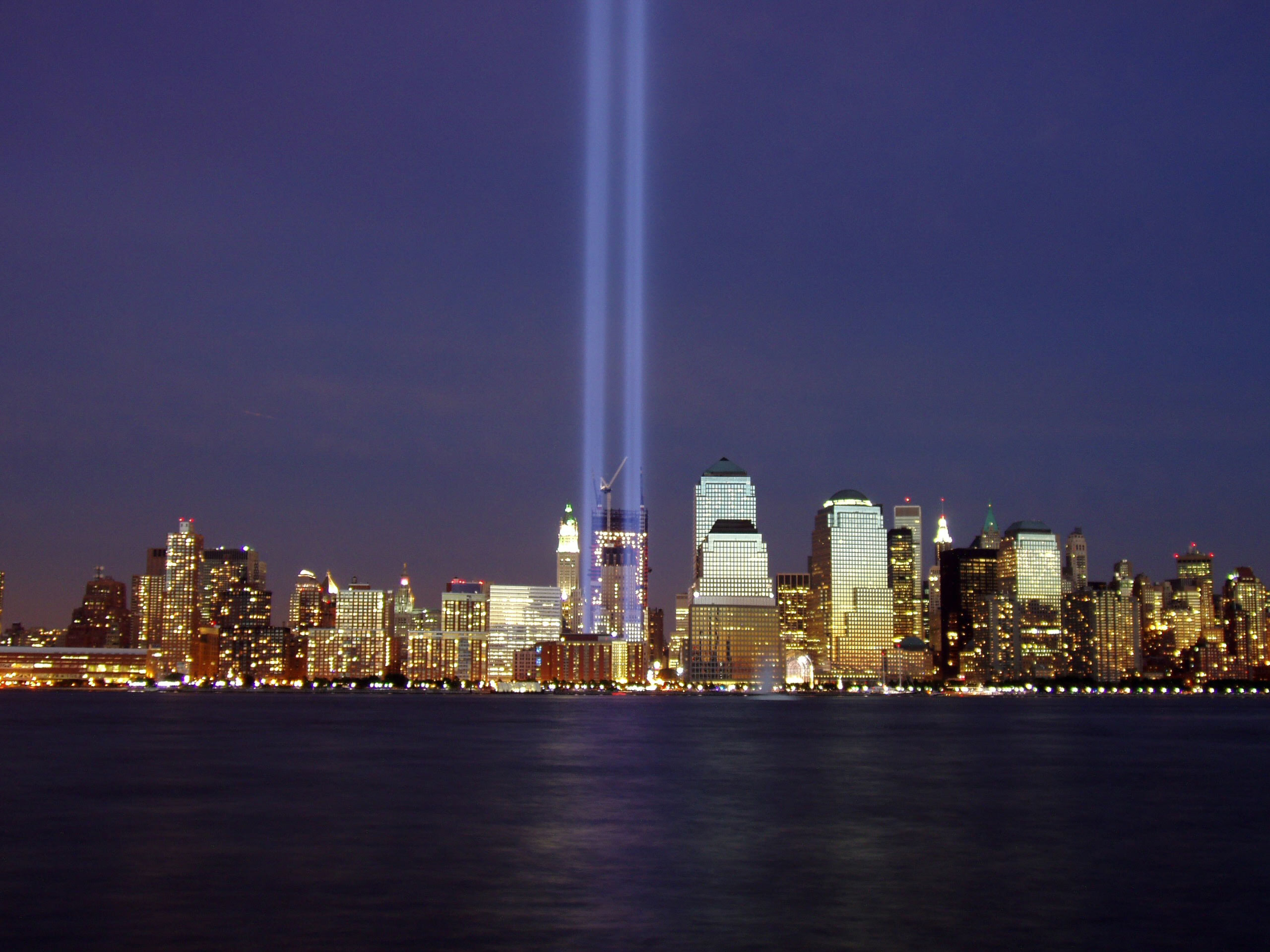
Wednesday, September 2, 2020
We Americans (The Avett Brothers)
President Trump breaks so many of the normal rules of politics that it can sometimes be hard to know when his tweets and comments are truly newsworthy. Even by his standards, though, the past several days have stood out. Consider:
Trump said on Monday that a plane “almost completely loaded with thugs” wearing “dark uniforms” had been headed to the Republican National Convention to do “big damage.” The claim is similar to a baseless conspiracy theory that spread online over the summer, well before the convention.
He has declined to condemn the killings of two protesters in Kenosha, Wis. He instead defended the 17-year-old charged in the shootings — a Trump supporter named Kyle Rittenhouse — saying he was acting in self-defense. Trump also promoted a Twitter post that called Rittenhouse “a good example of why I decided to vote for Trump.”
He defended violence committed by his supporters in Portland, Ore., who fired paintballs and pepper spray at Black Lives Matter protesters.
He compared the police shooting of Jacob Blake in Kenosha to missing “a three-foot putt” in a golf tournament.
He claimed that “people that you’ve never heard of” and “people that are in the dark shadows” are controlling Joe Biden.
He claimed Democrats were trying to “destroy” suburbs with “low-income housing, and with that comes a lot of other problems, including crime.” He added that Cory Booker — one of the highest-profile Black Democrats — would be “in charge of it.”
He predicted that the stock market would crash if Biden won.
He said that Biden, at the Democratic National Convention, “didn’t even discuss law enforcement, the police. Those words weren’t mentioned.” In fact, Biden held a discussion at the convention on policing, with a police chief.
Trump claimed that he “took control of” the situation in Kenosha by sending in the National Guard. In fact, Wisconsin’s governor, not the president, sent the National Guard.
He retweeted messages asserting that the pandemic’s death toll was overstated. Evidence indicates the opposite is true.
He said that protests against police brutality were actually a secret “coup attempt” by anarchists “trying to take down the President.”
Biden has taken a very different approach to the unrest in Kenosha, Portland and elsewhere. He has told no apparent untruths, and he has criticized violence from both the political left and right — even though many liberals, whose votes Biden needs, are uncomfortable with any criticism of people on their side of the debate.
G.O.P. reaction. The Times tried to reach about a dozen leading congressional Republicans and ask for their reaction to Trump’s claims. “None cared to comment,” Mark Leibovich writes. Senator Mitt Romney offered one of the few public responses, calling the president’s comments “simply jaw-dropping.”
VOTE! VOTE! VOTE! VOTE!
P.S. I just ordered this mask (above) for myself as well as my husband and three adult children. Oh, did I say VOTE?... 😏
SONG: We Americans by The Avett Brothers
BOOK: A Very Stable Genius: Donald J. Trump's Testing of America by Philip Rucker, Carol Leonnig
POEM: Third Time's a Charm by David Kirby
Don’t you wish the president would just shut up?
I mean, why comment on everything all the time.
Let’s hear it for silence. Yes, the helicopter of the world
is always circling overhead, but only rarely and usually
never does it suddenly fix its spotlight on the genius
that is you. What does he expect, a chattering dolphin
to rear up in front of his every tweet/answer to
a journalist/remark to a staffer who’s not supposed
to leak it but does and go chee-chee-chee-chee?
Mozart ends The Magic Flute with the words
“Triumphant strength has rewarded beauty and wisdom
with an eternal crown,” but he was Mozart.
Even ordinary jibber-jabber can go too far, as when
you give someone a present and they say
“You didn’t have to do that” and you think, “I know
I didn’t have to, but I wanted to, though I’m having
second thoughts now,” or someone brings a casserole
to your potluck, and you say, “Oh, how lovely,”
and they say, “Yeah, but it’s way salty, plus I left it
in the oven too long,” and you think, “My, doesn’t
that sound delicious!” Actually it was Mozart’s
librettist Emanuel Schikaneder who wrote the end
of The Magic Flute as well as the rest of it, but still.
Doesn’t the president have speech writers?
The divorce firm of Thyden Gross and Callahan
works out of Friendship Village, Maryland (I’m not
making this up) and recently represented a wealthy
Islamic gentleman who invoked the ancient law
of talaq by saying “I divorce thee” three times
to his wife and bestowing the sum of $2,500
on her while retaining the bulk of their two million
dollar estate for himself. The Maryland Court
of Appeals said no, however, stipulating that
the talaq did not afford the same protections
of due process, prenuptial agreements,
and division of property that Maryland law did,
a ruling in which the court is joined by
those Islamic scholars who say it isn’t right to
invoke the talaq in one sitting and that there
should at least be a period of time between
the “three strikes” as well as other learned
devotees of that venerable faith who say
the talaq is reprehensible and shouldn’t be
used at all. Every time the president goes
yada-yada-yada, I wish Mitch McConnell would say,
“I impeach thee, I impeach thee, I impeach thee”
and he’d disappear like the witch in The Wizard
of Oz, and here I’m just referring to the president’s
banal and mendacious utterances and not
the ugly ones like grabbing somebody by their
you-know-what. In this respect he could at least
take lessons in subtlety from 18th century German
writer Georg Christoph Lichtenberg, who said
of the prostitutes he encountered in London
that “they attach themselves to you like limpets”
and “they seize hold of you after a fashion
of which I can give you the best notion by the fact
that I say nothing about it.” Now you’re talking.
[David Kirby, 10/13/19 : “I have misgivings about the current move to impeach. That process is usually used to convince the people that the president is a bad person, but we already know that. Too, I bet this president would be delighted; it’ll just give him another chance to feel sorry for himself. No, I’d prefer that he just go away. That’s called magical thinking, as is this poem’s call for Mitch McConnell to do the deed.”]
QUOTE: "When you blame others, you give up your power to change." ~ Robert Anthony
Posted by
Susan
at
3:55 PM
0
comments
Labels: Avett Brothers, Carol Keonnig, David Kirby, New York Times, Philip Rucker, Robert Anthony, vote
Sunday, April 26, 2020
Pleas (Widespread Panic)
In both red and blue states, government and health officials are finding innovative ways to cope, but still lack what experts say they need to track and contain outbreaks. And while the U.S. has made strides over the past month in expanding testing — about 1.2 million tests were done in one week alone — its capacity is nowhere near the level President Trump suggests it is.
and...
A rash of ominous new polls and President Trump’s erratic briefings have the G.O.P. worried about a Democratic takeover of both the presidency and the Senate in November if Mr. Trump doesn’t put the nation on a radically improved course.
From their mouth to goddess' ears! Buy stock in purple candles now... :-)
SONG: Pleas by Widespread Panic
BOOK: Practicing Mindfulness: 75 Essential Meditations to Reduce Stress, Improve Mental Health, and Find Peace in the Everyday by Matthew Sockolov
POEM: Things To Try That Might Knock Out the Virus* by Richard Prins
1. Chug a carton of expired milk
2. Host a nationwide pillow-fight
3. Bail out the fossil fuel industry
4. Creepy accordion music
5. Ask to speak to the virus’s manager
6. Redeem a lifetime of earnest prayer for one (1) bad-ass miracle
7. Drunk-dial your ex
8. Knock your teeth out one by one and put them inside a maraca, then scare the virus away with your snazzy, impeccable rhythm
9. Crack a dodo bird egg and drink it raw
10. Wrap your body in tin foil, like a burrito
11. Wrap your body in dental floss, like a mummy
12. Smile more often, while flagellating yourself
13. Shave your head and boil all the hairs; serve with tomato sauce and parsley
14. Dose your pets with LSD and see if they think up an out-of-the-box solution
15. Huff some toothpaste
16. Have a staring contest with a taxidermied moose
17. There’s always spontaneous combustion
18. When all else fails, steal the virus’s identity, max out all its credit cards, then marry it so it can’t testify against you
19. Did you try turning yourself off and on again?
*The author doesn’t recommend any of these activities; he’s just wondering out loud if they might work and/or being sarcastic. Quoting him, in or out of context, shall be construed as proof of bias. The U.S. Surgeon General advises forgetting everything you just read.
QUOTE: "Re-examine all you have been told in school or church or in any book, and dismiss whatever insults your own soul." ~ Walt Whitman
Posted by
Susan
at
1:30 PM
0
comments
Labels: coronavirus, COVID-19, Matthew Sockolov, mindfulness, National Poetry Month, New York Times, panic, Richard Prins, Walt Whitman, Widespread Panic
Tuesday, September 11, 2007
The Last Fare of the Day (Richard Shindell)
Living With the Dead by Alice Sebold
September 11, 2005, The New York Times
Oakland, Calif. - And where do the dead go after they have sucked down their last breaths and drowned in the rafters of their homes? After they have died in the aftermath of fiery explosion? Do they gather, as some believe, together, and ascend to an otherworldly level; or do they remain, watching; or disappear altogether? Do they wait to hear the stories we will tell?
The truth is, none of us knows what the dead do. But on earth, where we remain, the living become the keepers of their memory. This is an awesome and overwhelming responsibility. And it is simple: we must not forget them.
These first weeks after Hurricane Katrina, this fourth anniversary of the attacks on the World Trade Center and the Pentagon, are not the dangerous days. The dangerous ones are ahead of us—always. They are the days when if we are not careful the dead will fall away from us because of our neglect.
There are the grieving families who will never forget. The co-workers and neighbors who survived, who, like those left living at the end of war, may be haunted for the rest of their lives. Why was one person taken and not another?
What I would wish for us is that we would turn away from being obsessed by numbers or by politics, and sit with our dead. That we would listen to what they have to tell us instead of doing the easier things: tossing back and forth volleys of blame, recrimination and muscular public bluster.
No, New Orleans will not come back as it was. And yes, it will come back.
No, a new building is not the World Trade Center, but there can still be a new heart for downtown Manhattan.
But no matter what, you cannot bring the dead back. They are gone.
What can the living do in the aftermath of Hurricane Katrina and 9/11, where loss has greeted us twice on a national scale in such a short span of years?
Do the dead wish you to suffer? Do they want you to watch CNN and Fox News for days on end? Do they want your guilt or pity? All of these things are like jewels to them. In other words—valueless where they have gone.
Instead, a woman wants her husband not to forget her but to go on and live. A child longs for a lost mother's arms again. A man grows peaceful when his partner finds new love. Some of the dead, I imagine, get enraged at these things. They are dead after all. They get to do and feel—I hope—what they want to.
The living who were close to the dead have a well-marked path of grief to walk down. But what about the rest of us? What can we, the distant—those of us who live in Nebraska or California or the very tip of Maine—do?
You are in your kitchen or your backyard or stuck on an endless elevator ride. You are sitting with a book in the park. Perhaps it is an image you remember having seen. A handmade grave of sheets and bricks. "Here Lies Vera. God Help Us." Perhaps it is the voice from a message left on an answering machine. "They have told us to remain at our desks. I'm O.K., Mom. I love you."
Perhaps it is less specific: Bodies falling from high windows, bodies floating in muddy water. Bodies wrapped in dirty bedding and tucked along the sides of bridges and highways. The faces of the missing, taped and tacked up on a wall.
Whatever it is that comes to you in three months, six months, a year or more, don't turn the page of your book and forget, don't stab the elevator button trying to hurry up the trip. Stop.
These tragedies, it's worth remembering, grant us an opportunity to understand what is perhaps our finest raw material: our humanity. The way we at our best treat one another. The way we listen to one another. The way we grieve.
Who can forget the funerals of the firemen lost in the twin towers? Who can imagine the funerals to come in the weeks and months ahead in Louisiana and Mississippi? We won't be present, in front of our television or through the newspaper, for all of them. The press itself cannot, beyond a certain point, do anything but name and count the dead.
So grieve for the particular lives that come to you. Think of the grandmother slumped in her wheelchair under a plaid blanket, or the body of a young financial analyst from West Virginia who was never found but whose smiling face still greets us from a Web site of the dead. Let them guide you to understand that it is our absolute vulnerability that provides our greatest chance to be human.
Look up from this newspaper you are reading, ignore the morning traffic you may find yourself in tomorrow, turn off the television one day this week and watch the moon. Think of the dead of 9/11 and of Hurricane Katrina. Stay there a moment. Remember them.
Obviously, just as when John F. Kennedy was assassinated... and the Challenger exploded, we all have frozen in time where we were and what we were doing during the horror - on 9/11/01, I was just sitting down to the fourth in a series of all-day Childcare Rated Licensing meetings at Nova Southeastern University, attended by the best and the brightest in the preschool field.
Five minutes into our session, someone received a cell phone call that a plane had flown into one of the World Trade Center towers - when she apologized for taking the call and announced its content, our moderator was snappy with her, saying that, horrendous as it was, it wasn't anything we could do anything about and we needed to move ahead with our agenda. A few minutes later when the second plane hit, everyone realized it was not an isolated incident - the moderator seemed extremely embarrassed to have minimized the first occurrence.We disbanded the meeting but no one left just yet - we all gathered in a small office with a TV and watched the proceedings unfold again and again on instant replay before our unbelieving eyes.
I stayed until about 10 and then headed to the office - I wanted to make sure the children were as shielded as possible from the news. I set up a TV in our teacher workroom and we used the honor system so staff could make sure their classroom was covered and come up one at a time to satisfy their need for information - it was extremely difficult to carry on "business as usual" with the children, but we had to behave as if nothing was wrong. Naturally a steady stream of parents came early to pick up their children, not only in an attempt to keep them safe but also to tangibly hold a loved one while so many in New York City had lost their own - one of the hardest things I had to do that day was to stay publicly calm and strong... and on the job... when all *I* wanted was to be home with my own children.
I called the boys when they got home from school and I phoned Sarah in Orlando and told her not to risk driving to Pembroke Pines but to stay where she was - it broke my heart for us all not to be under the same roof during this crisis (especially when people kept saying that Disney World was the next logical target) but it felt like the right decision. I stayed until the last child was picked up at 6 p.m. and then raced home to immerse myself in the television news barrage - although I felt my senses (and sensibilities) were under assault, because I had been virtually deprived of information all day (except in small sound bytes) I was drawn to the screen in an attempt to process the reality, finally realizing that no matter how many times I watched, with tears continuously streaming down my face, it was still going to end up the same way.
I do believe that the nature of my job helped ease the healing process for me - as I went in search of articles for my parents on how and what to say to their children about the tragedy, it was a learning experience. We are all changed from that day forward, or at least we should be - the greatest ongoing lesson for me was tell the people you love that you love them every single day... and I still do.
SONG: The Last Fare of the Day by Richard Shindell
BOOK(S): Afterwords: Stories and Reports from 9/11 and Beyond by The Editors of Salon.com, David Talbot (Foreword)
Portraits: 9/11/01: The Collected "Portraits of Grief" from The New York Times
I see you again and again
tumbling out of the sky,
in your slate-grey suit and pressed white shirt.
At first I thought you were debris
from the explosion, maybe gray plaster wall
or fuselage but then I realized
that people were leaping.
I know who you are, I know
there's more to you than just this image
on the news, this ragdoll plummeting—
I know you were someone's lover, husband,
daddy. Last night you read stories
to your children, tucked them in, then curled into sleep
next to your wife. Perhaps there was small
sleepy talk of the future. Then,
before your morning coffee had cooled
you'd come to this; a choice between fire
or falling.
How feeble these words, billowing
in this aftermath, how ineffectual
this utterance of sorrow. We can see plainly
it's hopeless, even as the words trail from our mouths
—but we can't help ourselves—how I wish
we could trade them for something
that could really have caught you.
QUOTE: "The real differences around the world today are not between Jews and Arabs; Protestants and Catholics; Muslims, Croats, and Serbs. The real differences are between those who embrace peace and those who would destroy it; between those who look to the future and those who cling to the past; between those who open their arms and those who are determined to clench their fists." ~ Bill Clinton
Posted by
Susan
at
12:55 AM
0
comments
Labels: Alice Sebold, Annie Farnsworth, Bill Clinton, Esquire, falling man, Jim Thompson, Neil Gaiman, New York Times, Richard Shindell, Salon, September 11, Stan Lee